Town of Swansea Shares Information Ahead of Upcoming Special Town Meeting

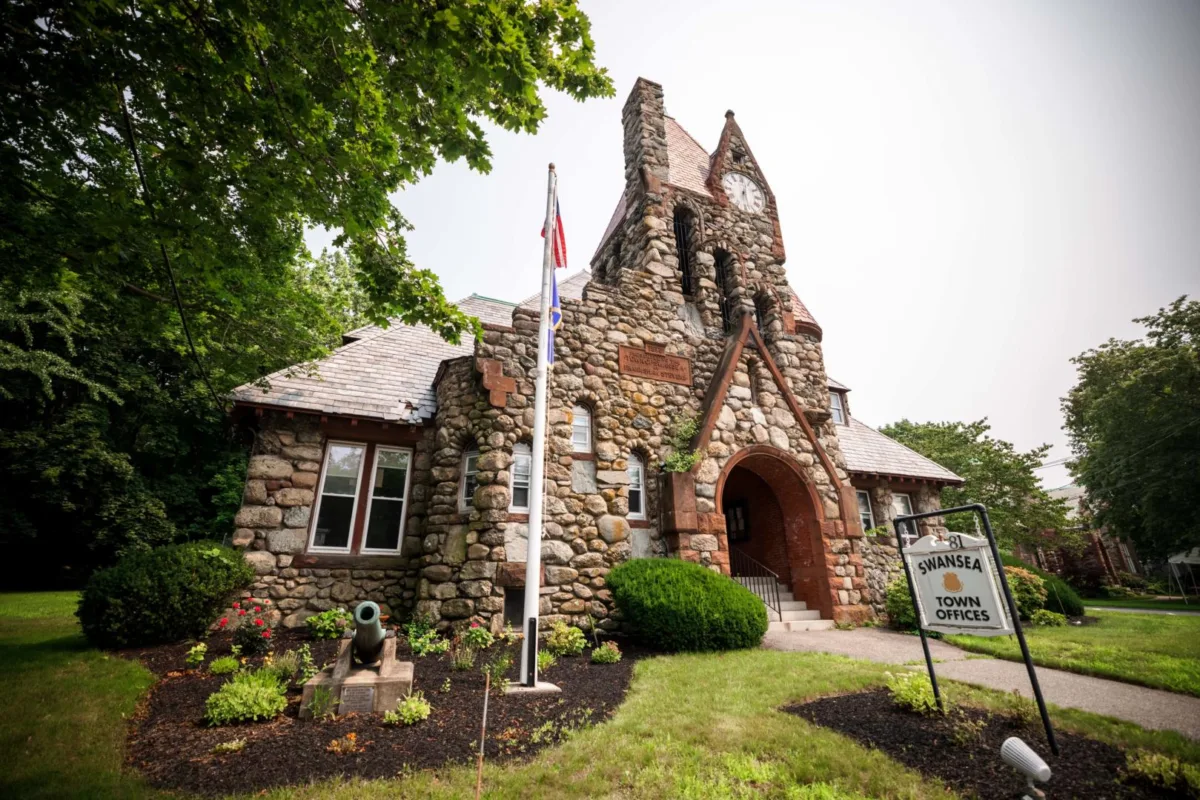
The Town of Swansea would like to share information with community members about its upcoming Special Town Meeting.
The Town of Swansea would like to share information with community members about its upcoming Special Town Meeting.
SWANSEA — Chief Marc Haslam reports that the Swansea Police Department is investigating multiple incidents in which two unknown suspects have approached Swansea residents and posed as utility company employees in an attempt to gain access to their homes.
The Swansea Police Department is actively investigating two separate incidents in which two individuals claiming to be employees of a utility company have attempted to enter homes and steal from residents. One of these attempts resulted in the suspects successfully gaining entry into the home and property being stolen.
In both cases, residents reported being approached at their homes by two men who were driving a white van and who identified themselves as employees of a utility company.
Through their investigation, Swansea Police determined that one suspect has attempted to distract the homeowner while the other collected valuable items throughout the residence.
Anyone who believes these suspects are in their neighborhood or who has information about these incidents is encouraged to contact the Swansea Police Department at 508-674-8464.
The Swansea Police Department would like to provide residents with the following safety tips:
###
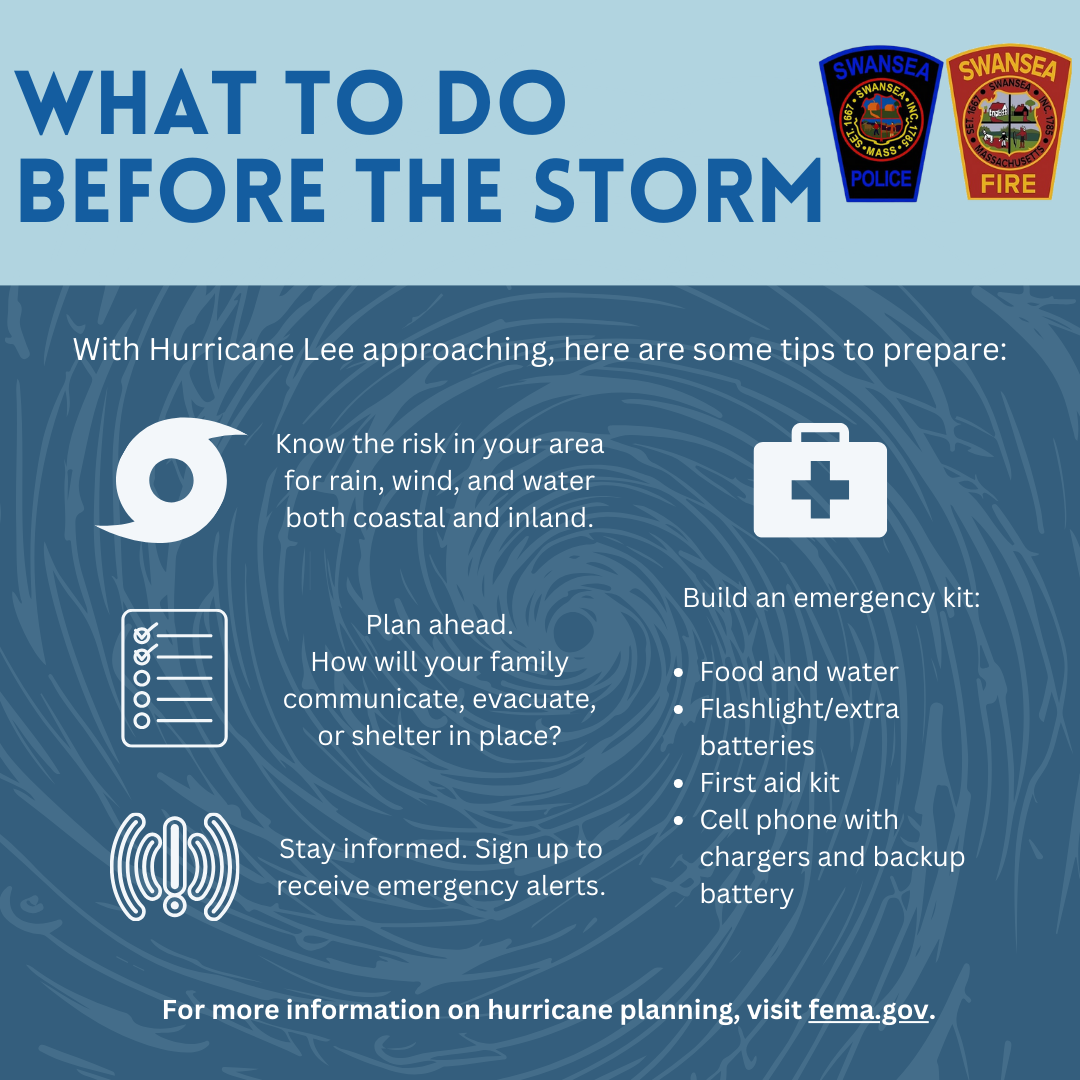
The Town of Swansea, Police Chief Marc Haslam and Fire Chief Eric Hajder are asking residents to remain alert and take the necessary precautions as Hurricane Lee is tracking toward New England in the coming days.
Chief Marc Haslam is pleased to announce that the Swansea Police Department is actively seeking academy-trained police officers.
SWANSEA — The Swansea Board of Health reports that elevated bacteria levels have led to the closure of Sandy Beach and Cedar Cove.
On Tuesday, July 25, the Massachusetts Department of Public Health notified the Town of Swansea that elevated bacterial levels detected at Sandy Beach and Cedar Cove necessitate closure of both beaches.
The beaches will reopen when testing shows levels within the State’s allowable limit.
The Swansea Board of Health tests all public and semi-public beaches weekly throughout the summer. While this week’s test for Sandy Beach and Cedar Cove came back within the allowable limits set by the state, the running average of bacterial levels for the last five tests exceeded the state standard.
Signage has been placed at the entrances and parking lots of the public beaches to inform beachgoers of these closures.
Sandy Beach and Cedar Cove will be reopening as soon as bacteria levels return to acceptable levels.
Updates about beach openings and closures can be found on the Town of Swansea’s Facebook page and the town’s website.
At this time, Swansea Town Beach, Coles River Club, and Leeside Club remain open to the public for swimming.
The State’s beach testing program monitors over 1,100 public and semi-public beaches in Massachusetts to ensure the safety of swimmers and beachgoers and prevent pathogens spread by contamination. Indicator organisms, which are specific bacteria that resemble harmful pathogens, are used to predict the presence of these pathogens. In Massachusetts, the presence of Enterococci and E. coli bacteria is monitored in beach waters.
Bacteria can enter beach water through various sources, including stormwater runoff, malfunctioning septic systems, sewer overflows, wildlife and pet waste, and agricultural runoff. Swimming in water contaminated with bacteria can lead to gastrointestinal, respiratory, dermatological, eye, and ear symptoms, and in some cases, more serious illnesses. Children, the elderly, and those with weakened immune systems are particularly vulnerable.
Frequent rain, such as has occurred this season, can lead to beach closures.
For more information, residents can contact the Swansea Board of Health at 508-674-5731.
The Town of Swansea will provide updated information regarding the status of the town’s beaches as it becomes available.
###
SWANSEA — Chief Eric Hajder and the Swansea Fire Department wish to share guidance on hurricane awareness and preparedness this season.
Gov. Maura Healey has proclaimed July 9-15 as Hurricane Preparedness Week in Massachusetts, which recognizes the importance of preparing for the impact of extreme weather.
June 1 marked the official start of the Atlantic Hurricane Season, which runs through Nov. 30. Most hurricanes and tropical storms that impact New England occur during late August and September, and residents are encouraged to prepare early.
Hurricanes can bring many types of wind and water hazards, including storm surges, strong winds and flooding. The Department of Homeland Security and the Federal Emergency Management Agency (FEMA) offer several tips to help residents better prepare for extreme weather should it occur.
Know Your Evacuation Zone: Learn if you live or work in a hurricane evacuation zone. The best action to protect yourself and your family from the flooding and high winds caused by hurricanes is to evacuate when ordered to do so, before those conditions hit your area. Know and follow the directions from local officials for community evacuation and follow posted evacuation routes.
Visit www.mass.gov/knowyourzone to learn if you live or work in a hurricane evacuation zone. If you live in an area that may flood and may need assistance evacuating, plan with family, neighbors, and friends who may be able to assist, and contact your local public safety officials to make them aware of your needs.
Make an Emergency Plan: Have an emergency plan for how your family would communicate, evacuate and shelter in place should there be an emergency. An emergency plan should address the specific needs of all of your family members and those you are responsible for. Steps to making an emergency plan include the following:
Build an Emergency Kit: Build an emergency kit that will sustain your household for 3-5 days without power. A basic emergency supply kit might include the following recommended items:
Store items in airtight plastic bags and put your entire disaster supplies kit in one or two easy-to-carry containers such as plastic bins or a duffel bag.
Prepare Your Home: You can improve your home’s ability to withstand hurricane conditions. Consider cutting weak branches and trees that could fall on your house. Make sure there’s nothing that could blow around during the storm and damage your home, and move bikes, lawn furniture, grills, propane tanks and building material inside or under shelter. Keep drains, gutters and downspouts clear of debris. Cover up windows and doors by using storm shutters or pieces of plywood. Secure all doors on your property and find a safe location for your vehicle.
Stay Informed: Every family should have multiple methods for receiving emergency alerts. Learn more about different types of alerting and information tools including the Emergency Alert System, Wireless Emergency Alerts, NOAA Weather Radio, social and traditional news media, and local notification systems.
The Commonwealth’s 2-1-1 hotline is available 24×7 for non-emergency assistance. It is available with translation in more than 150 languages and can be accessed via video relay services.
For more information on hurricane planning, click here.
###
Police Chief Marc Haslam and Fire Chief Eric Hajder wish to share several important safety tips and reminders as residents prepare to celebrate the Fourth of July holiday.
Chief Eric Hajder, on behalf of the Swansea Fire Department, would like to congratulate volunteer firefighter Matt Thayer upon his graduation from the Massachusetts Firefighting Academy’s Call/Volunteer training program.
As part of Distracted Driving Awareness Month, Chief Marc Haslam announces that the Swansea Police Department is conducting heightened distracted driving patrols.
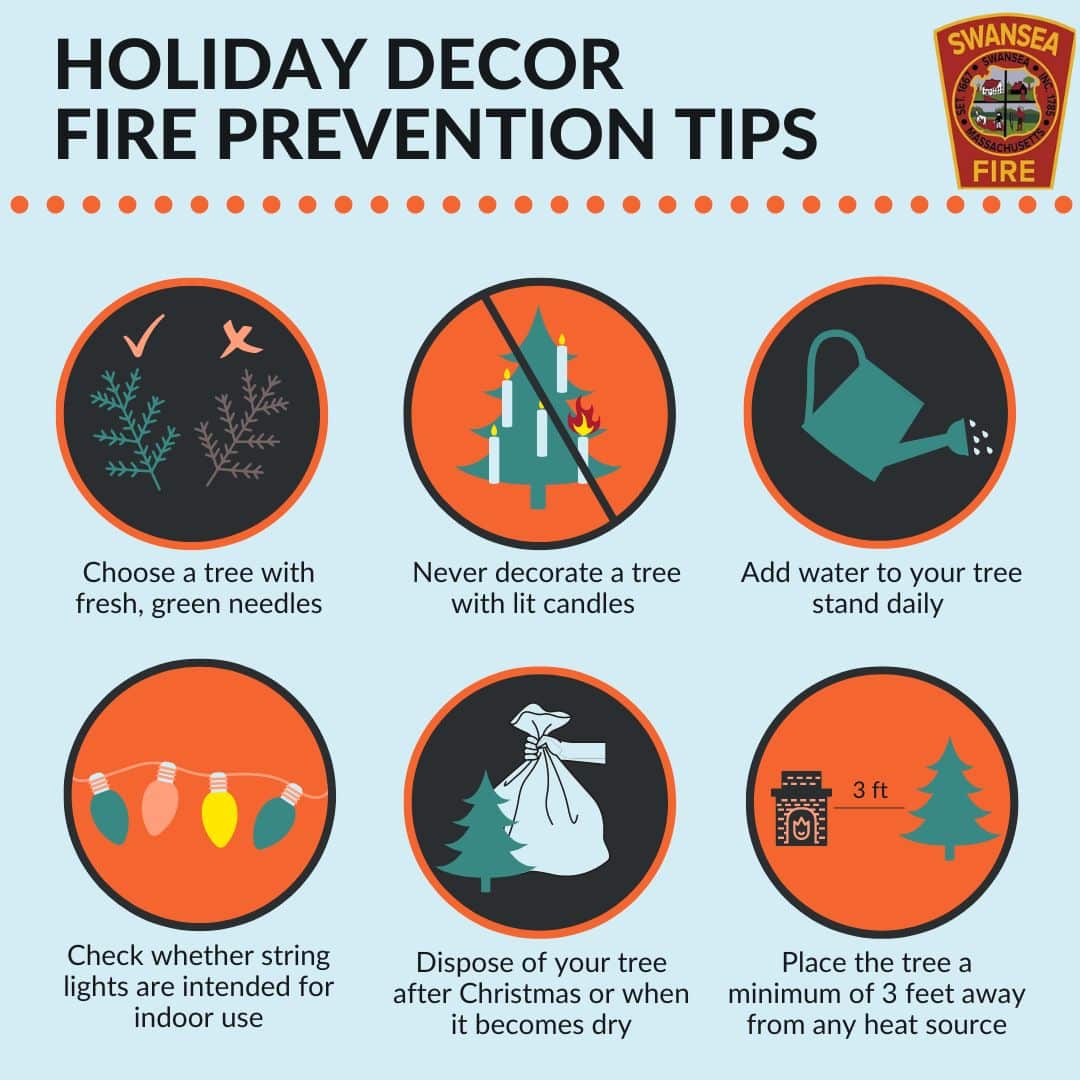
Chief Eric Hajder and the Swansea Fire Department would like to share important fire prevention tips for community members to be mindful of while decorating for the holidays.